Tuesday, July 2, 2024

New Chapter: How I came to be in Scotland


How I came to be in Scotland. 

Without going into too many details, which I’ll save for another post I ended up in Scotland because of cancer.

In March I was diagnosed with breast cancer. I had just had the fifth surgery on my knees two weeks before I was diagnosed details for another time.

I have had two partial mastectomies/lumpectomies since then.  The surgeon was sure that he had gotten it all the first time, but with multiple positive margins, I went in for a second surgery. 

When I met with the surgeon last Thursday to get my stitches removed, he told me that unfortunately, there was still at least one positive margin. Meaning I would need yet another surgery. My body is very stealthy and its attempts to kill me.

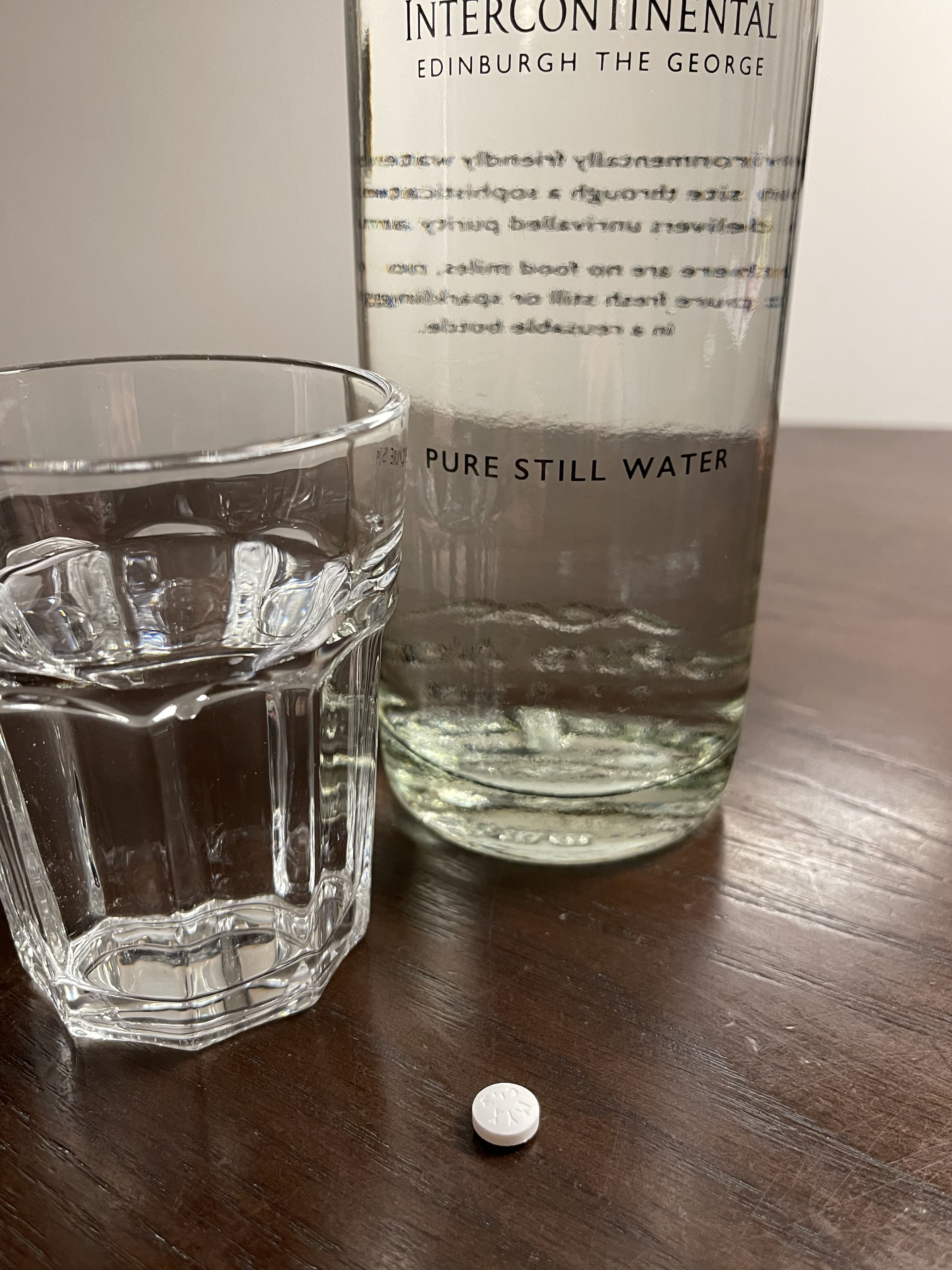
I’m mostly writing this post just to document what will be the first dose of a medication I will be on for years. Tamoxifen.

Since I’m not able to start radiation as planned, I’ll need to start taking tamoxifen now. (However, it’s contra indicated with surgery—because nothing in my life can be simple. I will take it for one week and then hold it a week before surgery and two weeks after.) but we have to start treating it somehow with all these delays in the cancer still being in me, so this is the solution for now.

My surgeon said that he will be on vacation until July 9. But will get me on his schedule for a third partial mastectomy/lumpectomy shortly after he returns. 

I told him that if he was going on vacation, maybe I would go on vacation too and we could meet back, along with the anesthesiologist again in 2 weeks. 

To be fair I had already been and always am looking at flights and locations to explore. 

I somehow settled on Scotland and I’m so glad I did. I’ve only been here about 14 hours but somehow the moodiness of the weather and texture of all the stones and different colors of greens have been good for me.

To be honest, I’ve put off taking this pill for a few days because I’ve heard the side effects are so bad and just wanted a few days without new side effects and pains and hurts. But it needs to be done.

I’m not really one for pomp or circumstance but it’s somehow helpful for me for those to be a little ritualistic tonight, sitting in my lovely hotel room with the pill set out on the table documenting— accepting—starting—what will be prominent event in my story. 

Taking the first of many pills that I will be taking for years to come.

Sunday, January 12, 2020

Tetanus

Yesterday as I was getting report (update of all the patients) from the off-going nurse I commented on how much I've learned and seen already. Things I would never see "back home". Diseases so horrifying and cruel that faces, images and families are burned in my mind forever. Diseases that have been all but eradicated through vaccination in more developed countries. Things, that sadly, due to willful ignorance I may actually have to see break hearts, families and bodies again"back home".
I mentioned that the only thing I feel like I haven't seen, and that I hope to never see (as it is one of the most gruesome and torturous diseases imaginable) was TETANUS.

That day I saw tetanus. I wish I never had. Torturous is the right word for it. It's easily contracted through the soil. Yes, even in the U.S. soil and that of other developed countries. Just a small cut, sometimes so small it goes unnoticed or thought of as insignificant is enough to the let the tetanus bacteria in where it releases toxins. Within days these neurotoxins cause a systemic infection causing every muscle in the body to wrench, tighten, twist, and contort. A person has the tell-tale "lock jaw" sign in which the muscles in their face and neck (and everywhere) are so stretched, and strained, and tight that one cannot open his mouth, the jaw is locked shut. The back muscles constrict so extremely the skeleton is bent painfully, unnaturally into an awkward, arching, twisted backbend that lifts the patient off the bed as they whimper and cry in torment. But even crying is hard because the face is so taught. I watched it happen.

Aside, from vaccinate immediately (playing catchup), treat with antibiotics (often for several weeks/months) and try to relax the muscles with drugs and give pain meds for the unearthly contortions (all of which help...some...but not enough to make it un-excruciating).

I will try to portray to you, very briefly, the image I keep seeing over and over. As we went to move the patient from the emergency stretcher to a hospital bed, his father slid his arms under his shoulders and under his knees as you would to normally carry a child who had fallen asleep up to bed. However, the patient was rigid, and not a little. There was no bend in his knees, no flopping of his head or falling of his arms to his sides as he was lifted. Rather he lifted as one straight-backed stone, arms bent harshly at 90 degrees, muscles so tight it kept his whole body as if it were only one very solid piece. All I could think of was that it looked like someone trying to carry a surfboard. Because of the awkward stiffness of the patients body, it took two other people to carry this frozen body to the bed.

DON'T write/speak/tell me anything about anti-vaxx anything. Just don't. 

No shortage of need in this world

While at the hospital families provide all the cares for the patients. Many come from very far away and have almost no resources. A caregiver is required to be with the patient at all times except in extreme circumstances where there is no family or family is also hospitalized-or if they are an orphan. With the infants, many parents actually climb inside the crib and sleep with the baby in the crib. Others, sleep in the hospital bed with their child...and sometimes a spouse...and other children they had to bring along. These are not large hospital beds and sometimes an entire family sleeps in the bed with the patient (technically not allowed, but when there is no space, what are you going to do? Others sleep outside on the ground or in the outdoor concrete corridors of the hospital. A few have tents, many use whatever they have on hand to build a makeshift shelter for the night, days, weeks, months they are here.

The hospital doesn't feed the patients or families. The families either make or buy food and bring it in. This a problem for many who either come emergently or have no means to buy or make food once they do arrive. They also do many of the cares, like counting how much the patient eats and drinks, weighing and counting diapers and ensuring physical therapy exercises get done after they have been taught how to do them. It is all up to them. (This is common in many hospitals throughout the world, particularly in developing countries.)

As I mentioned before, many people come from far away and risk a lot by coming, particularly at this time of year. (Some villages don't even have roads that lead to or from them.) It’s harvest season and bringing their child to the hospital means they may lose an entire years worth of crops and salary and work. For those who come from very far this might mean walking, a scooter with several family members crammed on, or a long bus and tuktuk ride. Laos has very few “cities”. The majority of Laos is incredibly rural with very basic housing housing many generations together. There is no clean water. It all must be boiled or bottled. Much of Laos doesn't have electricity. Some parts of Laos that do have electricity often have shoddy, jerry-rigged set-ups and fires are common because the makeshift addition of electricity with crazy wires, etc hanging to/through a house not intended built for it. The villages (which are counted by how many families live there, not the number of people) are small and often only work as subsistence farmers, meaning they only grow enough to feed their own families and trade within their small communities without much, if any, excess. So again, missing the harvest can be devastating. I can only imagine the strain and stress this puts on them, not to mention the whole ordeal of having to figure out how to get here, often not knowing how they will get home. Mad respect for all of the people in Laos. There is some help the hospital can give for these families to ensure they have food while they are here, and in extenuating circumstances will sometimes help them get back home. As with most places, those who live closer to the city have more access to care, and are often more educated regarding medical care and disease prevention. 

One especially great thing about this hospital that I’m sure makes a huge impact is the “Outreach” program. The outreach team will, I think twice a week, go out to visit previous or chronic patients that have missed their appointments or ensure the family is doing the home care correctly. The outreach team will also ask if there are any sick in the village and bring them back to the hospital if care is needed. Some times they go out for several days if they are going some where that is difficult to get to are far away. They kind of work as a home health, social work, patient and family advocate, solve every problem team.  We have one child here right now that lives several hours away that outreach brought in. They patient has a serious chronic condition reliant on frequent blood transfusions but the family has no way of getting here. Outreach went out and found this child 5 months after he was due for an appointment. He, of course, is very, very sick. I would say we probably have about 10 kids with this exact story every week. Outreach does amazing work, and they do what they can but there are simply too many, too far away and sometimes family does not want, or cannot come in and the children pass away. There is no shortage of need in this world which is difficult for me to completely fathom, even in the midst of it, having come a from a land of so much excess. 

Monday, December 30, 2019

Volunteering in Laos, the beginning- Initation by fire


The staff here is pretty fantastic. Not only are they knowledgable, they have the tolerance and humility of saints. I can’t imagine having new volunteers come every month or few months and having different ideas of what is important or how things should be done. I, of course, have things that I wish I could emphasize and change but the truth is they are doing a pretty great job and I have to understand the relativity of the situation along with my own personal biases about what is most important and what should be done or improved upon next. The longer I am here the more I realize that I am actually not “doing” much. The staff know what they are doing far more than I do. The deal with things like preventable disease like meningitis, Japanese encephalitis, polio, tuberculosis, among others things like burns and tropical diseases like malaria, dengue, weird fungal stuff, far more than I do. In these, and many other situations, they are the experts, and I learn a lot from them. 

Yes, the longer I am here the more I feel like my job is not necessarily medical as much as solidarity and to stand as a witness. I don’t know how that translates or comes across but that is the best way that I can think to say it. I am experiencing a lot. I am seeing a life that I knew was remote and less fortunate than my own, but I am seeing a ruggedness I hardly believed existed anymore…and I am in the city. And seeing now that my job is more of a witness, and hopefully, a help I will attempt to share some of the things I see and experience. I understand that my view is colored very much by my own life and as I am seeing on the regular, with much humor involved, many things are misconstrued or lost in translation. So, forgive me if things are not quite right or “lost in translation,” either from my misunderstanding or because they are passing through the filter of my mind. 

In regards to a lack of frequent updates, I have learned sometimes you just have to wait for these things to come out in their own time. They can’t be forced just because I have the time or desire to write. Sometimes my mind and spirit-and the story-need a little time, a little distance and a few breaths before being able to “speak them out loud”. All that being said, here goes. 

Ended my second shift ever at the hospital coding an infant. I’d made friends with mom, even though we don’t speak the same language, throughout the day. Her baby was sick and we moved him from the main area (where he had been for a few days) to the Emergency Area where we could give him more attention (when I say we, I mean the Lao staff, I technically am not allowed to provide patient care, only support to the staff). I had put my arm around mom when he first took a turn for the worse. A few hours later things got really bad. As soon as chest compression started on his little body, mom ran straight at me from across the room and collapsed crying into my chest. I held her for several minutes while they performed CPR on her new little baby. In the end, he did not survive. When he was gone and lying still, I helped mom into a chair next to a bed and placed him in her arms. He was very sick and we have limited resource. Too tired to cry right now. 

Two shifts in and we coded and lost another baby. 

I’ve witnessed many deaths since I’ve been here. More than we would at home. The hospital does a great job and saves a great number of lives but there is still a lot we can’t do. 


Taking this act behind the scenes

I'm going private. Very few people even know this blog exists but since I plan on sharing it a bit more, I want it to be a little more secure. Let me know if you still want access to it as I'll be changing it to private in the next few days. 

Sunday, June 3, 2018

More from Bangladesh


I always have to be in the right mood to write about my travels and it’s difficult to get there sometimes, I guess because it’s hard to face and because I wish I were still there. Plus there is always a certain amount of perspective that comes with any travel especially to a country very different from one’s own. That perspective can fade quickly and you can be a little ashamed of yourself for how quickly it fades. I also almost feel a little bit that real life is happening in places like the camps and in developing countries and that my own is life is very much a facade or a shadow of what real life is. And that is certainly true considering more people live without adequate basic resources let alone feel oddly “poor” because we can’t have everything we instantly want despite having an excess amount of food and access to any amount of clean water we could hope for. I don’t quite feel like I’m accomplishing anything in my little life here in the states sometimes despite being incredibly busy and worried about who knows what. 

And so I begin, trying to convey complex feelings even I don’t understand and to tell the stories of another world so very different from our own that I don’t know where to begin. And the world in the Rohingya refugee camps is definitely that. These people deserve, more than most, to have their stories told-for the sake of all humankind their stories need to be told. Now, I know that whatever I write someone will find a way to criticize or be offended by. I ask those people to keep their mouths shut or go help in the camps and then tell their own stories, not to judge me by mine-seen and experienced through my admittedly imperfect eyes. I can only write from my own experience, using my own thoughts through the eyes I have, at the present time of experiencing it. 

I put this disclaimer here because I am not what most people think of when they think of a “humanitarian”. Those who know me, know that I can come off a little cold, abrupt, rigid…sometimes ice-queen-y even. I’ve been told this about myself. I don’t know why I come across that way but I know that I do. I also know I am not overly sweet nor do I see the world through rose-colored glasses. I’m incredibly sarcastic with the dry, morbid sense of humor shared by many a nurse and most accurately once described as an optimistic cynic. I do love kittens though. My only reason for telling you this is to point out this…you do not have to be a perfect person to do something good. Even with our dark or imperfect sides, or even if we do not “look” like what others want us to look like while doing a certain activity, we can still do and be some good. Even if we are not “good” in a way that other people want to us be. Now to the camps. 

It’s difficult for me to convey individual stories this time because we really only had one translator.  I signed up go with SAM’s (Syrian American Medical Society)-the same group I went to the Syrian refugee camps in Jordan a couple of years ago. It turned out that only 3 of us ended up going. It was two pediatricians, Promise, a long-time private-practice pediatrician from Washington D.C., Samantha, a newly trained Brit from London who has done extensive volunteer work for long stints in developing countries with various NGO’s, and me. This was our team going Into the camps. Just the three of us. They each saw anywhere from 70-80 patients a day each and used the local Bengali doctors in training as translators. (There were two newly graduated Bengali doctors but who haven’t taken their exams yet. SAMs was paying them salaries to help out in the camps but mostly they were doing it because they were amazing, exhausted but tireless people.) I tried to help triage but since I had no translator our little triage information was basically limited to vital signs and and physical appearance. And mostly, the three of us, were there trying to give some respite to the doctors and “medics” taking vitals who’d been doing so for who-knows-how-many months, generally 6-7 long days a week. God bless each one of them. 

There were a few friends that generously sent me money to help me balance the cost of this trip and buy medical supplies for the clinics. Most of what I bought was basic stuffs like blood pressure cuffs, thermometers, stethoscope, etc. Although my job was incredibly easy it was complicated by not being able to communicate with the medics who were there before me who I think appreciated the respite but didn’t want to dump on me and I didn’t want to come in and step on toes but we did all in all get along and felt each other’s good intentions even if we couldn’t communicate in words. One of the medics even used my sharpies to make me a beautiful drawing and presented it to me with a shy smile. 

There was one little girl, about 9 years old, who came to the clinic several days in a row for something that the doctors were following. She would have to wait for hours to be seen and would shyly watch me (well stare at my eyes really and try not to get caught) So I brought her over to my little triage table. I taught her how to use the equipment and take vital signs. Her whole demeanor and smile changed throughout the week. She became my little nurse’s assistant. It also made a lot of the people who came to the clinic to be seen crack a slight smile to see working there along side of me. :)

I need to talk a minute about the children there. The Rohingya in general seem to be a very mild, somewhat shy people. But even in other places, like the rest of southeast Asia where, culturally, the people are very calm and mild, the children are still curious and still smile and play. The children within the camps were abnormally stand off-ish and mistrusting. (Understandably so.)  They did not try to interact at all. In fact, it took quite a bit of coaxing to get them to interact. It makes sense given what they’ve been through and are still going through but it was so drastically different that it stood out immediately. Eventually…I did get them to open up :).  If I had any kind of impression or thoughts while preparing for this particular trip it was, “focus on the kids”. I think playing with the children helped the adults to relax and trust us a little bit more too. It softened all us a bit to have the kids start to smile, including the staff members working with us and the neighborhoods surrounding our little clinics. 

There were two clinics that we went to in different areas of the camps. Mostly we saw primary care type stuff. But really next level primary care. People came with colds and body aches but much more severe colds and body aches than what we might go to the doctor and complaining about. People had really, really bad colds that had gone on for weeks/months. They had respiratory infections that were extreme. And the body aches, I can only imagine were exponentially worse than any body ache I’ve ever experienced. The amount of work and walking they do in a day on almost no calories (if any), not to mention the referred pain from the traumas and emotional stress that they experience probably puts my worst stress headache to shame. We saw 60lb women carrying 30lb bags of rice and double buckets full of water (I think a gallon weighs like 17 lbs or something). The heaviest patient I recall seeing, including men, weighed 119lbs. It is not a stretch to compare their physical appearance to that of what you may have seen in holocaust videos. Everyone was malnourished and some of the babies were terribly, terribly thin. 

I do have to mention that there are supplemental feeding clinics for babies and breastfeeding mothers. There are a few “hospitals,” one particularly that has and “ER” with inpatient capacity set up by Doctors Without Borders. There are women support groups and even some education going on. In the space we were using as our clinic, another group was training some of the women as mid-wives. There are people helping and doing some very good things. However, the amount of help available in comparison to the amount of need is heart-breaking. If our help was a drop in the ocean, it wouldn’t even be big enough to make a perceptible ripple. It goes back to something I’ve come to realize and shared with people in the past. I cannot change the world, I’m not going to solve world hunger, what I do is not enough. But it is what I can do. I have very, very small circle of influence but I will do what I can within the tiny speck of my world.

We saw several cases of the mumps, a few cases of the measles, lots of chicken pox (completely preventable diseases with vaccination) and there was an entire clinic set up to the treatment and containment of diphtheria (also preventable with a vaccine) by Samaritan’s Purse. I have to admit the clinic was impressive. From my standpoint and impression based on that clinic and what I’ve seen elsewhere, they do phenomenal work. Unfortunately, we saw very young children already developing cataracts and losing their vision. I don’t know if this is from the sun, dust, or disease but we saw it more than we should have. I don’t know if anyone is there doing or screening for this but I sure hope so. To see people have permanent damage, go blind or even die from easily preventable circumstances in our day and age is so frustrating. 


The need for basic life necessities was incredibly scarce, despite the amount of aide attempting to be provided by the host country of Bangladesh and from various groups and NGO’s throughout the world. I saw unimaginable-and even as I witnessed them- unfathomable problems of pure survival. 

Again, we mostly saw primary care issues: colds, asthma, muscle aches, a few wounds…only of course they were all a much higher degree of “sick” than what we in western cultures might consider going to the doctor for. The colds had gone on longer and were more severe. The muscle likely much more extreme due to sleeping on the ground in addition to having all the extreme physical stress they put on their bodies from the amount of physical labor it requires to survive on nothing. I’m sure we can all agree they likely have much stronger emotional stressors that contribute to the pains, hurts, and exhaustion that can lead to physical, emotional and mental illness. 

Throughout my time in the camps as I went about trying to do what little I could while there I kept finding myself grateful for the little things. Seeing all the dirty, swollen, busted up feet I suddenly found myself very grateful for shoes. I was more appreciative of each bite I took while there. And, oh, how thankful I was for a hot shower at the end of the day to rest, relax, and be very clean after being so hot, dusty and sweaty. And I’d think, as I indulged in what felt like a much “needed” shower and washing away of a long day, that most of these people had likely never had a long hot, shower like that. Even before they escaped across from their home country of Myanmar/Burma, they likely did not live in such a way that afforded for much rest, let alone hot running water with the turn of a knob. And I grew more and more thankful for little things. And as I grew more thankful I grew more charitable and wanted to give more. As I watched this happen within in myself there was a thought that kept surfacing: Giving out of guilt doesn’t do anyone any good. Giving out of gratitude will change both the amount that is given and the feeling with which is received. 

There is always a temptation to feel guilty for what we have. Especially when we see such extreme, dire circumstances. I do’t believe that guilt does anyone any good. Wouldn’t we all rather receive a gift from a friend who is happy to give than a hand out from stranger who feels guilty? Even with the language barrier, maybe because of it, these were my friends and I was made happier for what I do have and simultaneously happier to give what I could to my new friends. 


Thank you again to all those who helped. It makes a huge difference in what I am able to do when in the camps and for my faith in humanity. God bless you all. 
Thursday, April 19, 2018

Bangladesh-Rohingya Refugee Crisis

I’ve had a difficult time writing about Bangladesh. Even as I write out all that I can remember I feel a little hesitant about posting it. I don’t want human suffering to become a spectator sport. Not that any one of my friends reading this-and especially not those who personally sacrificed to support me-would view it that way. I have just been stuck. And I want to make sure it doesn’t come across as me taking exotic trips and coming back to tell the tail. 
That isn’t what it is like. These are serious problems and real people living them. And very real evil causing painfully real suffering to more of our fellow man than we can understand. Even being in the camps I don’t think my brain, heart or soul was able to fathom the magnitude or severity of the situation. And I don’t want to exploit or romanticize it in any way.

It’s difficult for me to get the stories of those I met this time out there because of the language barrier. I did not have a translator to help me. All the work I did was done through non-verbal communication. Whereas I do think it is beneficial to share individual stories-I feel that each person deserves to be seen and heard-I can’t do that for anyone this time. (I also think it helps those of us who’s worlds feel so far removed from the situation that it renders us unable to comprehend the Rohingya (and other) refugee crisis or other deprivations and horrors going on throughout the world.)

I will tell you that I think the heaviest person we saw, including men, weighed 119 lbs. I saw 60 lb women carrying 30 lb bags of rice. I saw too-skinny people walking up and down steep hills to carry water and rations they’d waited in line for back to their makeshift tent-homes. 

We saw several cases of the mumps, a few cases of the measles, lots of chicken pox, (completely preventable diseases with vaccination) and there was an entire clinic set up for the treatment and containment of diphtheria (also preventable by vaccine) by Samaritan’s Purse. Unfortunately, we saw several cases of very young children who have already developed cataracts and are losing their vision. I don’t know if this is from the sun, dust, or disease but we saw it more than we should have. I don’t know if anyone is there doing anything or screening for this but I sure hope so. To see people have permanent damage, to go blind or even die from preventable circumstances is so frustrating. 

The need for basic life necessities was incredibly scarce, despite the amount of aide attempting to be provided by the host country of Bangladesh and from various groups and NGO’s from around the world. I saw unimaginable-and even as I witnessed them- imaginative feats of pure survival. Despite the incredible lack of resources the camps are always bustling with industry and invention. The people are not lazy. They are industrious and fighting to survive and have done an impressive job of making a homes, a city really, out of nothing. 

Throughout my time in the camps as I went about trying to do what little I could while there, I kept finding myself grateful for the little things. Seeing all the dirty, swollen, busted up feet I suddenly found myself very grateful for shoes. I was more appreciative of each bite I took while there. And, oh, how thankful I was for a hot shower at the end of the day. To rest, relax, and be very clean after being so hot, dusty and sweaty. And I’d think as I indulged in what felt like a much “needed” shower and washing away of a long day:  most of these people had likely never had a long hot, shower like that. Even before they escaped across the border after being chased from their home country of Myanmar/Burma, they likely did not live in such a way that afforded for much rest, let alone a long, hot shower with running water with the turn of a knob. And I grew more and more thankful for little things.

This trip for me personally, turned out to be a lesson in gratitude. I know that is a feeble a weak thing, a true luxury really, to take away, but it made a difference in me. And as I grew more thankful, I wanted to give more. Another thought I had briefly was that I really should fell guilty for all that I do have but then I quickly realized that giving out guilt doesn’t do anyone any good. Me not taking a hot shower is not going to save the world any more than me not taking it is going to vicariously allow someone else to have it. But an increase in gratitude made the shower fantastically better and made me both able and willing to give much more. I think it magnified both how much I gave and the attitude with which I was able to give. Giving out of guilt I think takes some of the dignity away from the receiver as well. They can feel the intent with which it is given I believe. When given from a positive place, such as gratitude, I believe it can be received a little better as well. I know I would having an easier time accepting something from a friend who is happy to share than one who feels obligated by guilt. You become a little more sensitive to stuff like this I think when there is a language barrier and you have to go more off of “vibes” than verbal communication.


Thank you again, to those who helped make this trip possible. The work we did there was good but it was minimal in comparison to what is needed. Nevertheless, I am glad we were able to do something, even if it was something small. Because doing something is always better than doing nothing.